Why Good Research Gets Scooped and How to Publish First Without Cutting Corners
For centuries, scientific publishing has laid the foundation of how knowledge is shared across the world. Journals emerged as a breakthrough technology that allowed discoveries to be communicated faster than it would have taken in the past. Over time, they became the primary means of scientific communication and the core infrastructure of scholarly knowledge.
Nevertheless, the same system that once empowered scientists is now standing in their way. This tipping point was reached in the mid-20th century when commercial publishers, such as Pergamon Press, created monopolies that profited from scientific publishing. Universities today pay substantial sums of money to obtain articles necessary for their institutions, some which are even written and peer-reviewed by their own researchers.
Whether this be the publication monopoly that controls the pricing of publications, forcing libraries and institutions to pay the price given to them, delays in the publishing process, questionable peer-review practices, or journal prestige rankings, these factors have cultivated an environment where getting your research out first is both more difficult and more important than ever.
As a result, modern research demands modern tools.
Publishing Before Another Starts Long Before Submission
‘Publishing’ is not done the moment a manuscript is submitted. In reality, a researcher can only publish a finding if they can:
Organize the data
Track analyses and revisions
Secure notes and sensitive information
Prepare the correct manuscript
Share outputs
Demonstrate compliance with ethics and data regulations.
In other words, publishing begins with efficient Research Data Management (RDM). This level of readiness cannot be achieved simply through scattered email attachments and shared drives. It requires a secure and streamlined RDM, all before a manuscript is even drafted.
The Need For Researchers To Attain Cohesion Across Borders
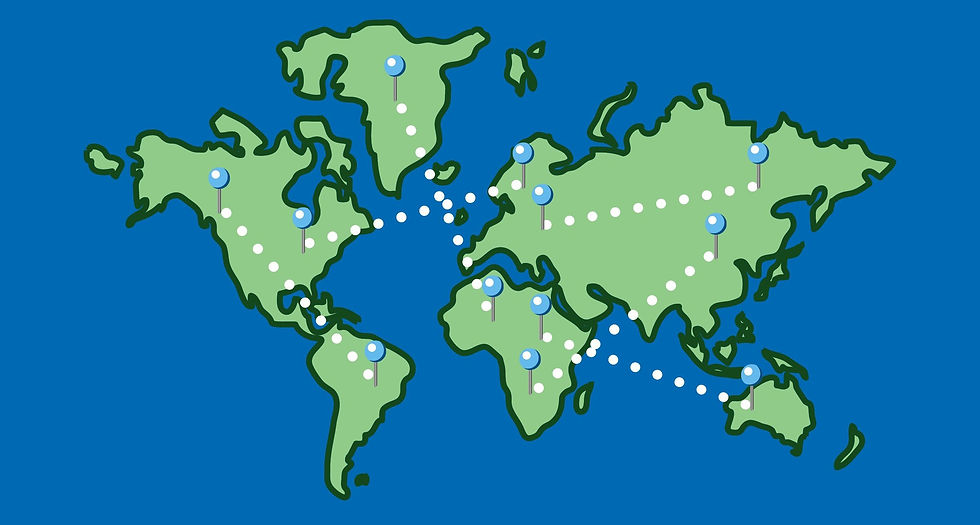
Today’s researchers must compete in an environment where multiple teams worldwide work on the same problem simultaneously. Due to technological advancements, researchers work in teams to bring their findings together and publish as one. Yet, all this sharing of private information and embedding data into emails and other communication platforms to communicate across borders can result in data breaches.
Another consequence of collaborating through communication platforms such as emails is that files can get lost in email chains, multiple versions of the same work can lead to confusion, and teams across institutions struggle to stay up-to-date with their peers.
Thus, an RDM platform is needed to support:
Secure collaboration with inter-disciplinary and cross-jurisdictional teams
Robust document collaboration tools (i.e., collaborating on papers to compare and merge documents in order to review, accept, or reject challenges)
A structured system to allow PIs to capture, maintain, and review metadata using standards such as DataCite, Dublin Core, or DDI
The Role of Preprints

In addition to traditional journals, many researchers now turn to preprints, which are publicly shared, non-peer-reviewed manuscripts. They help researchers demonstrate that they were first to report findings, increase visibility, and get feedback from the general scientific community.
However, as preprints require organized data and compliance with ethical and regulatory standards, they are only effective when supported by a strong RDM environment.
Overcoming Journal Delays By Obtaining a Platform To Publish Your Work
Researchers frequently waste months reformatting and resubmitting their work to different journals, without having a platform of their own to share their data. Even the most groundbreaking of research can be rejected multiple times simply because a journal has limited space or a specific editorial agenda. The consequences from these delays can lead to others getting their work out first, including years of the researcher's work, slower scientific progress, especially during times of crisis like pandemics, and significant career risks.
Simply put, traditional publishing models are not as fast as the speed at which discoveries happen.
Winning the Race Without Breaking the Rules
Though a drawn-out metaphor, publishing cannot be done without ensuring ethical and data compliance, just as a race win does not count if it was obtained without following the rules.
Researchers must demonstrate:
Proper data governance
Ethical approvals
Correct handling of data
Documentation of protocols and methodologies
As well, contemporary RDM environments must support FAIR (Findable, Accessible, Interoperable, and Reusable) as well as Open Science principles. These principles are increasingly required by funders, institutions, and research communities.
Publishing First Does Not Mean Rushing
It is necessary for a researcher to publish their work first, but it does not state in the blueprint that it must be done in a rush. This pressure can lead to errors, overstatements, and, as a result, mistrust. The goal is not to rush research but to complete it efficiently.
Final Thoughts
Scientific journals shaped the history of science. But the future of research will depend on how effectively scientists can manage, protect, and communicate their work in a fast-moving, open-access world.
Missing the chance to publish first is rarely about who worked harder. Instead, it is about who documented, collaborated, and disseminated their work more efficiently.

myLaminin is a RDM Platform that empowers researchers to do exactly that by helping to ensure:
Your research is secure - Done through web3 and blockchain protections.
Your team stays aligned - Global team contributions are possible, documented, and auditable.
Your compliance is maintained - Publishing meets FAIR and Open Science principles through myLaminin’s Open Science Search.
Your findings can be shared quickly and confidently - Your work can be published on myLaminin and to well-established data repositories.
If you want to future-proof your research and accelerate innovation, and your path to publication, explore myLaminin today.
Sources:
__________________________________

Vafa Javadova (article author) is a myLaminin intern, and studying Management and Organizational Studies (BMOS) at Western University.


Comments